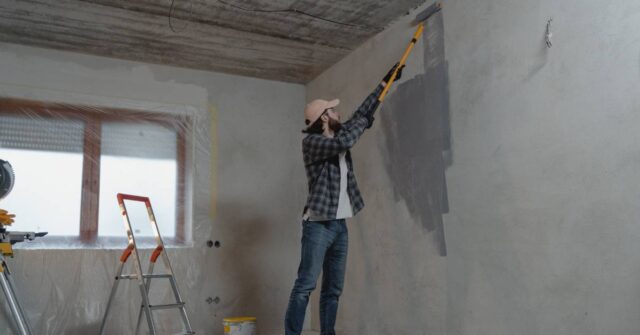
Repainting a home is one of the simplest ways to refresh its appearance, increase property value, and protect surfaces from everyday wear. Before starting the project, though, most homeowners ask the same practical question: how much paint is needed to repaint a 3-bedroom house?
The answer varies. The amount of paint required depends on several factors, including the size of the home, ceiling height, the number of coats needed, and the condition of the existing walls. Newly repaired plaster, for example, absorbs paint differently than walls that have been painted several times.
In this guide, we’ll look at realistic paint estimates for a typical Australian three-bedroom house, explain what affects paint usage, and show how painters calculate paint requirements for a full repaint.

Quick Answer: How Much Paint Does a 3 Bedroom House Usually Need?
For a typical Australian three-bedroom home, repainting the interior usually requires around 45 to 70 litres of paint, depending on the home’s size and the number of coats applied.
A rough breakdown often looks like this:
Interior walls: approximately 30–45 litres
Ceilings: approximately 10–15 litres
Trim, doors and skirting boards: approximately 5–10 litres
These estimates assume a standard repaint with two coats of paint, which is typically needed to achieve even colour and coverage.
Larger homes, higher ceilings, or significant colour changes can increase the total amount of paint required. Exterior repainting can also require substantially more paint, especially when primers or weather-resistant coatings are involved.
When you consider that repainting a home involves covering hundreds of square metres of surface area, it becomes clear why the total paint usage adds up quickly.
What Affects How Much Paint a House Needs?
Even homes with the same number of bedrooms can require very different amounts of paint. Professional painters consider several factors when estimating the materials needed for a repaint.
Size of the House
The total floor area of the home has the biggest impact on paint usage. Larger houses naturally have more wall surface to cover, particularly in open-plan areas where long walls extend across living spaces.
A compact three-bedroom house may require significantly less paint than a larger home with wide living areas, hallways, or stairwells.
Ceiling Height
Ceiling height also plays a role. Many Australian homes have standard ceilings around 2.4 metres, but modern builds and renovations often include higher ceilings.
Taller walls increase the total surface area, which means more paint is needed for each coat.
Number of Coats Required
Most professional repainting jobs involve two coats of paint to ensure a consistent, durable finish.
Some situations may require additional preparation or coats, such as:
- changing from a dark colour to a lighter one
- painting over new plaster or repaired areas
- covering stains or uneven surfaces
In these cases, painters may apply a primer or undercoat before the top coats, which increases the total paint required.
Surface Condition and Preparation
The condition of the walls can affect how much paint is absorbed. Rough, porous, or newly repaired surfaces tend to soak up more paint than smooth, previously painted walls.
Preparation work, such as sanding, patching, and priming, improves coverage and helps the final coat look even and consistent.
Type and Quality of Paint
Paint quality can also influence coverage. Higher-quality paints typically spread more evenly and often require fewer coats to achieve a solid colour.
Different surfaces also require different products. Walls, ceilings, trims, and doors are usually painted with separate types of paint designed for those specific surfaces.
Paint Coverage Explained (How Far One Litre Goes)
Paint manufacturers generally state that one litre of paint covers around 10 to 16 square metres of surface area. This is known as the paint’s coverage rate.
In practice, actual coverage can vary depending on several factors, including:
- the texture of the surface
- the method of application (roller, brush, or spray)
- the colour change is being made
- how absorbent the surface is
For example, if a wall area measures 150 square metres and the paint covers approximately 12 square metres per litre, you would need about 12–13 litres of paint per coat.
Professional painters usually allow a little extra paint in their estimates. This accounts for variations in wall texture and ensures there is enough paint for touch-ups if needed.
Example: Estimating Paint for a Typical 3 Bedroom House
To put these numbers into context, let’s look at a typical example.
Imagine a home with a floor area of 150 to 180 square metres and standard ceiling heights of about 2.4 metres. For a house like this, a typical interior repaint might require roughly:
Walls: around 35–45 litres
Ceilings: around 10–15 litres
Doors, trims and skirting boards: around 5–8 litres
If primer or undercoat is required, an additional 10–15 litres may be needed depending on the condition of the surfaces.
Large areas such as hallways, living rooms, and open-plan spaces often account for much of the total wall area in a house. These spaces typically have long, uninterrupted walls that require more paint than smaller rooms.
Professional painters also tend to purchase slightly more paint than the theoretical calculation suggests. This allows for surface absorption, second coats, and small touch-ups after the job is complete.

Interior vs Exterior Repainting: Paint Needs Are Very Different
When people ask how much paint a house needs, they’re usually referring to interior painting. Exterior repainting is a different type of project and often requires more specialised materials.
Interior painting usually includes:
- walls
- ceilings
- doors
- skirting boards
- trims and architraves
Exterior painting may involve surfaces such as:
- weatherboards or cladding
- brick or rendered walls
- fascia boards and eaves
- garage doors and exterior trims
Exterior surfaces are exposed to sun, rain, and temperature changes, so they often require primers, weather-resistant paints, and multiple protective coats.
In Australia’s climate, exterior paint does more than improve appearance — it also protects building materials from long-term weather exposure.
Can You Calculate Paint Needs Yourself?
If you’re planning a repaint, you can estimate paint requirements yourself. While the numbers won’t be exact, a simple calculation can provide a useful guide.
Simple Paint Estimation Formula
- Measure the height and width of each wall to calculate the total wall area.
- Subtract the space taken up by windows and doors.
- Multiply the remaining area by the number of coats you plan to apply.
- Divide the result by the paint’s coverage rate (square metres per litre).
This method can give you a rough estimate, but many homeowners underestimate paint requirements by overlooking certain surfaces or preparation steps.
Common mistakes include:
- forgetting ceilings
- overlooking trims, doors, and skirting boards
- not allowing for primer
- assuming one coat will be enough
Small details like these can significantly change the amount of paint needed for a full home repaint.

Why Professional Painters Often Estimate Differently
Professional painters approach paint estimates differently from simple DIY calculations. Instead of relying only on coverage figures, they assess the actual conditions of the property.
Experienced painters consider factors such as:
- detailed surface measurements
- preparation requirements
- primer and undercoat needs
- paint absorption across different surfaces
- material allowance for application waste
This approach helps ensure the project runs smoothly and that the finish looks consistent across the entire home.
A professional estimate also allows painters to plan the work properly, ensuring the right materials and preparation methods are used from the start.
How Long Does It Take to Repaint a 3 Bedroom House?
The time required to repaint a three-bedroom house depends on the size of the property, the level of preparation needed, and whether the work is done professionally or as a DIY project.
For homeowners painting the house themselves, the process can take one to two weeks or longer, particularly if the work is done during weekends or spare time.
A professional painting team can typically complete a standard interior repaint in around three to five days, depending on the home’s layout and the number of painters involved.
Preparation work, paint drying between coats, and the complexity of the surfaces all influence the final timeline.

Get an Accurate Quote for Repainting Your Home
While rough estimates can provide a helpful starting point, the most reliable way to determine how much paint your home needs is through a professional assessment.
Experienced painters can inspect the property, measure surfaces accurately, and identify any preparation work required before painting begins.
At Advanced Painting, our team provides clear, detailed repaint quotes based on the specific conditions of each home. This ensures the right amount of paint is used, surfaces are properly prepared, and the finished result looks clean and consistent throughout the property.
If you’re planning to repaint your home, requesting a professional quote is the easiest way to understand the scope of the project and the materials involved.
Frequently Asked Questions
Homeowners often have additional questions when planning a repaint, especially when trying to estimate materials, costs, and preparation requirements. Below are some of the most common questions people ask when repainting a three-bedroom house.
How many litres of paint are needed for a 3-bedroom house?
Most three-bedroom homes require approximately 45 to 70 litres of paint for an interior repaint, depending on the size of the property, ceiling height, and number of coats applied.
Does repainting a house include ceilings and trim?
In most cases, yes. A full interior repaint usually includes walls, ceilings, doors, skirting boards, and trims unless the project scope specifies otherwise.
How much does it cost to repaint a 3-bedroom house in Australia?
The cost can vary depending on the home’s condition, the preparation required, and the paint products used. The most accurate way to determine the price is by requesting a professional quote for your property.
Do I need primer when repainting walls?
Primer is often used when painting over new plaster, covering stains, or making a major colour change. It helps paint adhere properly and improves the durability of the final finish.
Can I repaint a whole house myself?
It’s possible, but repainting an entire house is a large project that requires time, preparation, and consistent application. Many homeowners choose professional painters to ensure a high-quality finish and a faster, more efficient result.